

India’s transition toward renewable energy is accelerating, and biofuels have become a critical part of the country’s strategy to reduce dependence on fossil fuels. As transportation demand increases and sustainability goals become more important, biofuel manufacturing companies in India are playing an essential role in shaping the future of the nation’s energy ecosystem.
Biofuels are derived from renewable biological resources such as plant oils, agricultural residues, and organic waste. These fuels provide a cleaner alternative to traditional petroleum products while supporting waste recycling and rural economic development.
This article explores the biofuel manufacturing sector in India, including the types of biofuels produced, major industry drivers, production technologies, and the role of biofuel manufacturing companies in supporting the country’s renewable energy goals.
Contents
ToggleWhat Are Biofuels?
Biofuels are fuels produced from biological materials such as plant oils, organic waste, or agricultural residues. Unlike fossil fuels, biofuels are renewable and can help reduce greenhouse gas emissions.
The most commonly produced biofuels in India include:
Each type of biofuel is produced using different feedstocks and technologies.
Types of Biofuel Manufacturing Companies in India
Biofuel manufacturing companies in India operate across different segments depending on the type of fuel they produce.
Biodiesel Manufacturers
Biodiesel companies convert oils and fats into biodiesel through a process known as transesterification. Common feedstocks include:
- Used cooking oil (UCO)
- Animal fats
- Non-edible vegetable oils
Biodiesel is widely used as a renewable alternative to diesel fuel in transportation and industrial sectors.
Ethanol Production Companies
Ethanol producers convert agricultural feedstocks such as:
- Sugarcane juice
- Molasses
- Maize and other grains
into bioethanol. Ethanol is primarily blended with petrol to reduce emissions and dependence on imported crude oil.
Biogas Producers
Biogas companies produce renewable gas by digesting organic waste such as:
- Agricultural residues
- Food waste
- Animal manure
Biogas can be used for electricity generation, heating, or converted into compressed bio gas (CBG).
Sustainable Aviation Fuel Producers
Emerging biofuel companies are developing Sustainable Aviation Fuel (SAF) to help reduce carbon emissions from the aviation sector.
Biofuel Manufacturing Process
The production technology used by biofuel manufacturing companies depends on the type of biofuel being produced.
Biodiesel Production
Biodiesel is produced through transesterification, where vegetable oils or fats react with alcohol in the presence of a catalyst to produce biodiesel and glycerin.
Ethanol Production
Bioethanol is produced through fermentation. Sugars extracted from crops are fermented using yeast to produce ethanol, which is then distilled and purified.
Biogas Production
Biogas plants use anaerobic digestion, a biological process where microorganisms break down organic waste in oxygen-free conditions to produce methane-rich gas.
Growth of Biofuel Manufacturing Companies in India
Add Your Tooltip Text Here
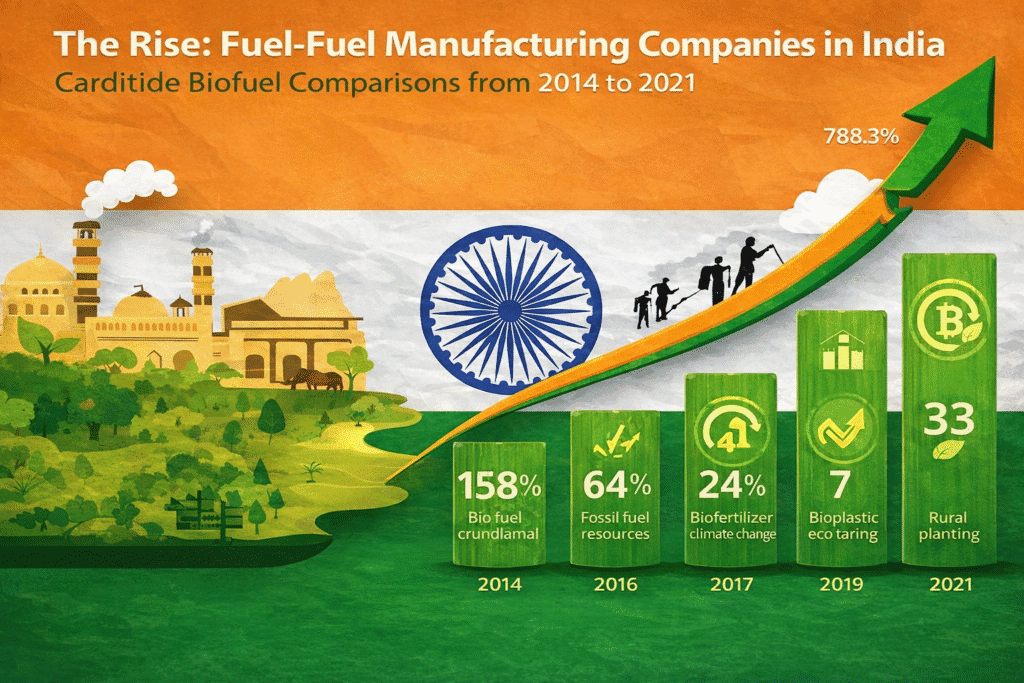
India’s biofuel industry is expanding rapidly due to strong policy support and increasing energy demand.
Government Biofuel Policies
The Indian government has implemented several policies to promote biofuel production, including blending targets for ethanol and biodiesel.
These initiatives aim to:
- Reduce crude oil imports
- Improve energy security
- Support rural economies
Waste-to-Energy Initiatives
Programs encouraging the recycling of waste oils and agricultural residues are helping create a reliable feedstock supply for biofuel manufacturers.
Growing Renewable Energy Investments
Private and public sector investments are increasing in biofuel infrastructure, including production plants, storage facilities, and distribution networks.
Key Factors Driving Biofuel Demand in India
Several factors are driving the growth of biofuel manufacturing companies in India.
Energy Security
India imports a significant portion of its crude oil. Biofuels help reduce this dependence by producing fuel domestically from renewable resources.
Environmental Sustainability
Biofuels produce fewer greenhouse gas emissions compared to fossil fuels, helping India meet climate commitments.
Rural Economic Development
Biofuel production creates opportunities for farmers and rural industries by generating demand for agricultural residues and energy crops.
Industrial Decarbonization
Industries are increasingly exploring biofuels as part of their sustainability and carbon reduction strategies.
Challenges Facing Biofuel Manufacturing Companies
Despite strong growth prospects, the biofuel sector also faces several challenges.
Feedstock Availability
Consistent feedstock supply is essential for biofuel production. Seasonal variations and supply chain disruptions can impact manufacturing operations.
Technology Investment
Advanced biofuel production technologies require significant capital investment in reactors, distillation systems, and purification units.
Logistics and Collection Infrastructure
Waste collection systems must be efficient to ensure a steady supply of feedstock for biofuel plants.
Regulatory Compliance
Biofuel manufacturers must comply with environmental regulations and fuel quality standards.
How to Evaluate Biofuel Manufacturing Companies in India
When selecting a biofuel manufacturer or project partner, several factors should be considered.
Production Capacity
Large-scale plants are better equipped to supply commercial volumes and support long-term contracts.
Feedstock Flexibility
Plants designed to handle multiple feedstocks can maintain production even during supply fluctuations.
Technology and Process Efficiency
Modern facilities use automated process control systems to maximize yield and reduce operating costs.
Environmental Compliance
Responsible biofuel manufacturing companies maintain strong environmental and safety standards.
Future Outlook for Biofuel Manufacturing in India
The future of biofuel manufacturing companies in India looks promising as renewable energy adoption continues to grow.
Several factors will shape the industry’s future:
- Expansion of ethanol blending programs
- Growth of biodiesel production
- Development of sustainable aviation fuels
- Increased investment in biofuel infrastructure
With supportive policies and growing demand for cleaner energy, India’s biofuel industry is expected to play an increasingly important role in the country’s energy transition.
Challenges Facing Biodiesel Manufacturers
Despite strong growth potential, the biodiesel industry faces several operational challenges.
Feedstock Price Volatility
Fluctuations in waste oil prices can impact production margins.
Supply Chain Complexity
Collecting and transporting feedstock from multiple sources requires efficient logistics networks.
Regulatory Compliance
Manufacturers must comply with environmental and fuel quality regulations.
Technology Investment
Modern biodiesel plants require significant capital investment in reactors, distillation systems, and automation.
How to Evaluate Biofuel Manufacturing Companies in India
The long-term outlook for biodiesel production remains positive as governments worldwide strengthen renewable fuel policies.
In India, increasing urbanization, growing transportation demand, and rising environmental awareness are expected to support biodiesel adoption.
Biodiesel manufacturers that invest in advanced production technology, diversified feedstock sourcing, and strong distribution networks will be better positioned to capture future market opportunities.
Planning to enter the biofuel market in India?
Request a market + technical feasibility assessment before investing in biofuel plant infrastructure.
Click HereBiofuel manufacturing companies in India produce renewable fuels such as biodiesel, bioethanol, biogas, and sustainable aviation fuel using biological feedstocks like plant oils, agricultural residues, and organic waste.
The most common biofuels produced in India include biodiesel, ethanol, compressed biogas, and emerging fuels such as sustainable aviation fuel.
Biofuel companies help reduce dependence on imported fossil fuels, support rural economies through agricultural feedstocks, and contribute to lower carbon emissions.
Biofuel manufacturers use feedstocks such as used cooking oil, agricultural residues, sugarcane molasses, grains, animal fats, and organic waste to produce renewable fuels.
Yes. India’s biofuel industry is expanding due to government blending mandates, renewable energy policies, and increasing demand for cleaner fuels.
Strategic Conclusion
Biofuel manufacturing companies in India represent a critical component of the nation’s renewable energy landscape. By converting biological resources and waste materials into usable fuels, these companies contribute to energy security, environmental sustainability, and rural economic development.
As industries and governments continue to prioritize cleaner energy solutions, biofuel manufacturers will play an increasingly important role in meeting transportation and industrial fuel demand. Companies that invest in advanced production technologies, strong feedstock sourcing networks, and sustainable manufacturing practices are likely to lead the next phase of growth in the biofuel sector.
For investors, policymakers, and industrial buyers, understanding the evolving biofuel ecosystem will be essential to navigating future energy markets and supporting India’s transition toward a more sustainable energy future.